Juge Bechir Akremi

Assassination of politician and lawyer Chokri Belaid

On February 6, 2013, as Chokri Belaid left his house in the El Menzah 6 district of Tunis, he was shot four times in the head and chest by an unknown person, who then fled with an accomplice on a motorcycle. He was rushed to the Ennasr clinic and died there shortly after. Judge Bechir Akremi was assigned the case by the attorney general on  the same morning.

The investigation was set to begin immediately, and within just 20 days, the first suspects were arrested. The details of this horrific crime started to emerge quickly.

Judge Béchir Akremi, with the help of expert forensic doctors, elite police units, and all available national and international resources, managed to uncover the full details of the assassination. More than 30 criminals, directly or indirectly involved in the attack, were arrested. Crucial evidence was obtained, linking these terrorists to cells in Syria and Libya. By all measures, the investigation was a success, but the political party of Chokri Belaid remained dissatisfied.

They believed that the rival political party, “Ennahdha,” was responsible and harassed Judge Akremi, who had already conducted a thorough investigation without finding any links. They used the case to divert attention by continually accusing innocent political opponents and accusing the judge himself of hiding facts.

These intense attacks on a professionally and adequately resolved case will remain in history as a stain on those involved. After Judge Béchir Akremi completed his final report, the case was handed over to another judge. Since 2014, no progress or new information has surfaced. (Update, November 2026: the men identified by his investigation have since been tried; four were sentenced to death in March 2024, sentences partly upheld on appeal in October 2025. See the chapter “The trial and the verdicts” below.) All known details of the case come from the investigation led by Bechir Akremi.

This investigation highlights the importance of thorough and impartial judicial processes in uncovering the truth and bringing criminals to justice.


Investigation file 26427: what Judge Bechir Akremi’s closing order says

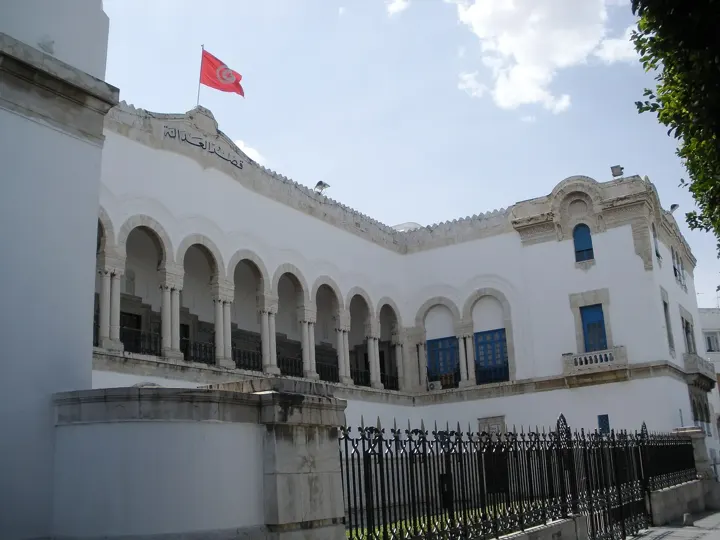
The Palace of Justice in Tunis
Photo: Dacoslett, CC BY-SA 3.0, Wikimedia Commons

Assigned the case on 6 February 2013, Bechir Akremi, first investigating judge of the 13th office of the Tunis court of first instance, closed the investigation into the assassination of Chokri Belaid with an order dated 19 March 2014 (case no. 26427/13). Over 427 pages, it reviews 35 suspects and sends 12 of them to the indictment chamber of the Tunis court of appeal. The part of the file split off on 12 March 2014 (no. 26427 bis) was closed by a second order on 13 April 2016.

Read Judge Bechir Akremi’s own account
  • 19 March 2014closing order, case no. 26427/13
  • 35 suspectsreviewed, 12 sent to the indictment chamber
  • 427 pagesof evidence: witnesses, cameras, phone taps

What happened on 6 February 2013?

According to the order, Chokri Belaid was shot at around 8 a.m. in the car park of his building in El Menzah 6. A witness saw a man fire three shots in a row; a neighbour heard three shots, then a fourth. The gunman fled on a motorbike.

How did the investigation trace the killers?

Street cameras filmed a grey Fiat Siena and a motorbike on 1 and 4 February 2013, which the order links to the suspects. Many phone lines were put under technical surveillance, and a first car was seized as early as 20 February 2013, in the presence of a suspect.

Whom does the order name?

According to the statements on file, Kamel Gadhgadhi, named as the main suspect, proposed the killing at a meeting at the home of Seifallah Ben Hassine, known as Abu Iyadh, leader of the Ansar al-Sharia group in Tunisia; those present agreed. The order also records that he brought the pistol from Libya himself. Kamel Gadhgadhi died before the investigation ended.

What did the judge decide?

On 19 March 2014: 12 suspects sent to the indictment chamber, 8 cleared for lack of evidence, 10 whose acts were already under other investigations, and proceedings ended for 5 suspects who had died. On 13 April 2016, in the split-off file: 9 suspects sent on, Abu Iyadh among them, one cleared, and proceedings ended for Ahmed Rouissi, who had died.

Source: Closing order no. 26427/13 (19/03/2014, PDF in Arabic) · order no. 26427 bis (13/04/2016) · Business News, 28/04/2014

Method and sources

This non-profit site aims to raise awareness of the injustice suffered by Judge Bechir Akremi, and says so openly. Its facts come from verifiable documents: closing order no. 26427/13 (published here as a PDF), order no. 26427 bis, court rulings, UN opinion no. 2/2025 and dated press articles, cited under each chapter.

Extracts from the order are given in their original Arabic, followed by a translation. Among the suspects, only public figures and people convicted at trial are named; no address or personal data is reproduced.

To cite the file: Tunis court of first instance, 13th investigation office, closing order no. 26427/13 of 19 March 2014 (Judge Bechir Akremi). Found an error? Write to Prisonnierspolitiquestunisiens@proton.me and it will be corrected.

Scroll to Top